AI & Technology
How AI Vision Algorithms Predict Age From Facial Biometrics
August 26, 2026 · 6 min read
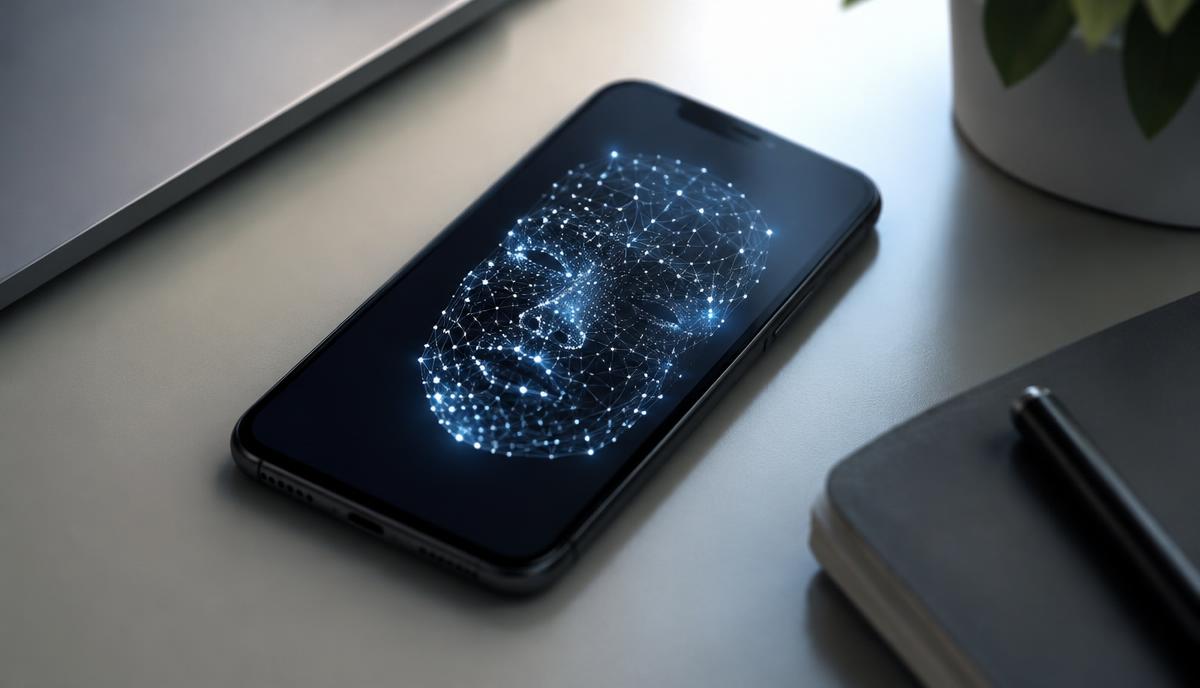
Upload a selfie to an age-guessing app and, within a second, it tells you how old you look. Sometimes it's flattering, sometimes it's insulting, and occasionally it's spot on. Behind that quick answer is a branch of artificial intelligence called computer vision.
Step 1: Finding the face
Before an algorithm can estimate age, it has to find a face in the image. Face detection models scan the picture for patterns that look like eyes, a nose and a mouth, then draw a box around each face. Modern detectors are fast enough to run in real time on a phone.
Step 2: Aligning and normalising
Faces in photos are tilted, turned and lit differently. To compare them fairly, the system identifies facial landmarks — often dozens of points around the eyes, eyebrows, nose, lips and jawline. It then rotates, crops and scales the face to a standard position and size. Some systems also adjust brightness and contrast.
Step 3: Extracting features
This is where deep learning comes in. Most age estimators use a convolutional neural network (CNN) or, increasingly, a vision transformer. These models process the image through many layers. Early layers detect simple patterns such as edges and textures. Deeper layers combine those into more complex features — skin texture, wrinkles around the eyes, the depth of nasolabial folds, the shape of the jaw, hair colour and hairline.
Crucially, nobody programs these features by hand. The network learns which patterns matter by studying examples.
Step 4: Predicting a number
The final layer turns the features into an age estimate. Approaches vary:
- Regression: the model outputs a single number, such as 34.2.
- Classification: the model sorts the face into age brackets, such as 30–35.
- Distribution learning: the model predicts a probability for every possible age, then takes the most likely value or the average. This handles the natural uncertainty in how old someone looks.
How the models are trained
Training requires huge datasets of face images labelled with real ages. Public research datasets have included hundreds of thousands of images collected from sources such as celebrity photos and public records. The model makes a guess, compares it with the true age, and adjusts its internal weights to reduce the error. Repeated millions of times, this process gradually teaches it what different ages tend to look like.
How accurate are they?
On standard benchmarks, leading models achieve an average error of roughly three to five years. That sounds impressive, but averages hide a lot:
- Lighting and camera quality change how skin texture appears.
- Makeup, filters and facial hair can shift estimates by years.
- Expression matters — smiling deepens lines around the eyes.
- Training data bias: models trained mostly on certain age groups or ethnicities tend to perform worse on others.
- Lifestyle and genetics: a sun-damaged 40-year-old may genuinely look 50.
Remember too that these systems estimate apparent age — how old you look — not your biological age or health.
Real-world uses
Facial age estimation is now used for age verification on some websites and in retail settings, such as self-checkouts selling restricted products. It's also used in research on skin aging. Regulators in several countries are examining how such tools should be tested and used fairly.
Privacy considerations
A photo of your face is biometric data, which many privacy laws treat as especially sensitive. Before using any face-scanning app, check whether images are processed on your device or uploaded, whether they're stored, and whether they might be used to train future models.
That's one reason AgeLens doesn't use face scanning. Our estimator runs in your browser using lifestyle answers only — no photo, no upload.
Key takeaways
- AI age estimators detect, align and analyse faces using deep neural networks.
- Models learn age-related features from large labelled datasets.
- Typical average error is three to five years, with bigger errors for some groups.
- They estimate how old you look, not how healthy you are.
- Facial images are sensitive biometric data, so check an app's privacy practices.
Curious where you stand?
Try our free, private age estimator — it takes under a minute.
Estimate my age →This article is for general information only and is not medical advice.